


OSHA Forklift Safety Standards Explained: Forklift Safety Compliance Guide
- Philix Chen
- May 18
- 4 min read

Operating forklifts safely is critical in many industries, especially in warehousing, manufacturing, and distribution. Forklifts are powerful machines that can cause serious injuries or damage if not handled properly. Understanding and following safety standards is essential to protect workers and maintain efficient operations. This forklift safety compliance guide explains key aspects of forklift safety, focusing on the regulations and best practices that help prevent accidents.
Forklift Safety Compliance Guide: Key Regulations and Practices
Forklift safety compliance involves adhering to specific rules and guidelines designed to reduce risks. The Occupational Safety and Health Administration (OSHA) sets these standards in the United States. These rules cover everything from operator training to equipment maintenance and workplace conditions.
Some of the most important elements of forklift safety compliance include:
Operator Training and Certification: Only trained and certified operators should drive forklifts. Training covers safe operation, hazard recognition, and emergency procedures.
Regular Equipment Inspections: Forklifts must be inspected daily or before each shift to ensure they are in good working condition. This includes checking brakes, steering, controls, and safety devices.
Safe Operating Procedures: Operators should follow speed limits, use seat belts, and avoid unsafe maneuvers like sharp turns or overloading.
Workplace Safety Measures: Clear aisles, proper lighting, and marked pedestrian zones help prevent collisions and accidents.
Maintenance and Repairs: Forklifts require regular maintenance to keep them safe and reliable. Any defects must be repaired promptly.
Following these practices helps reduce accidents and improves overall workplace safety. For more detailed information, you can refer to the official osha forklift safety standards documentation.
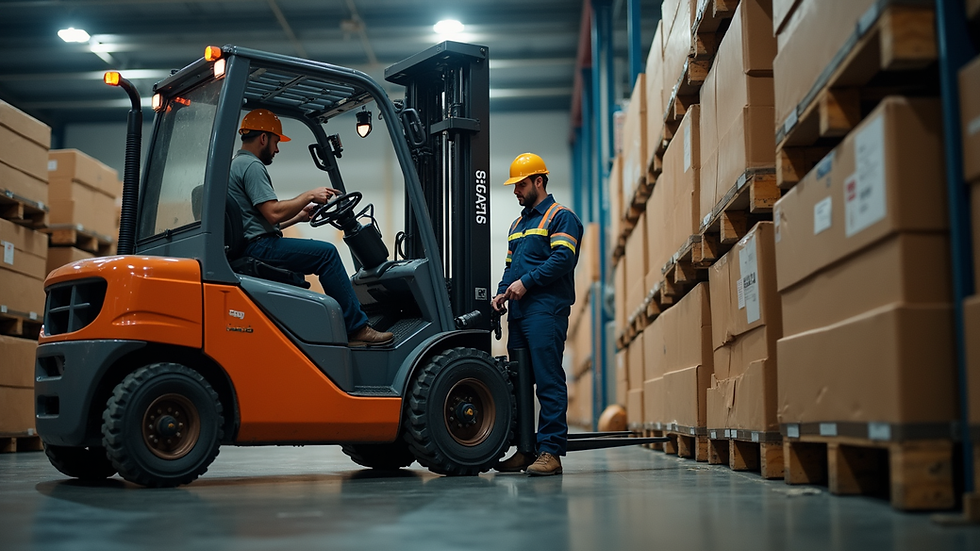
Understanding Forklift Hazards and How to Avoid Them
Forklifts present several hazards that can lead to injuries or property damage. Recognizing these dangers is the first step in preventing accidents.
Common Forklift Hazards
Tip-overs: Forklifts can tip over if driven too fast, turned sharply, or overloaded.
Collisions: Forklifts may collide with pedestrians, other vehicles, or objects if operators are not attentive.
Falling Loads: Improperly secured or unbalanced loads can fall, causing injury or damage.
Mechanical Failures: Faulty brakes, steering, or other components can lead to loss of control.
Poor Visibility: Blind spots and obstructed views increase the risk of accidents.
How to Avoid These Hazards
Always follow speed limits and avoid sudden turns.
Use horns and warning signals when approaching intersections or blind spots.
Secure loads properly and never exceed the forklift’s rated capacity.
Conduct daily inspections to identify and fix mechanical issues.
Maintain clear visibility by keeping the load low and using spotters if necessary.
Implementing these safety measures reduces the risk of accidents and creates a safer work environment.
What is the 3 Foot Rule for Forklifts?
The 3 foot rule is a safety guideline designed to protect pedestrians and operators in areas where forklifts operate. It states that pedestrians should maintain a minimum distance of three feet from any moving forklift. This rule helps prevent accidents caused by close proximity to the vehicle.
Why the 3 Foot Rule Matters
Forklifts have limited visibility and can stop only within a certain distance. Keeping a safe distance allows operators to react to unexpected movements and reduces the chance of collisions. Pedestrians should also stay alert and avoid walking behind or near forklifts.
How to Enforce the 3 Foot Rule
Mark pedestrian walkways clearly with lines or barriers.
Train employees on the importance of maintaining distance from forklifts.
Use signs and floor markings to remind workers of safe zones.
Encourage communication between operators and pedestrians, such as making eye contact or using hand signals.
Following the 3 foot rule is a simple but effective way to enhance safety in busy work areas.

Training and Certification Requirements for Forklift Operators
Proper training is the foundation of forklift safety. OSHA requires that all forklift operators receive formal training and certification before operating the equipment.
Components of Forklift Training
Classroom Instruction: Covers forklift types, controls, safety rules, and hazard recognition.
Practical Training: Hands-on practice under supervision to develop safe driving skills.
Evaluation: Operators must demonstrate their ability to operate forklifts safely.
Certification and Recertification
Operators receive certification after successful completion of training and evaluation. Certification must be renewed every three years or sooner if the operator is involved in an accident or observed operating unsafely.
Employer Responsibilities
Employers must ensure that:
Operators are trained and certified.
Training programs meet OSHA standards.
Refresher training is provided as needed.
Records of training and certification are maintained.
Investing in thorough training reduces accidents and improves productivity.
Forklift Maintenance and Inspection Best Practices
Regular maintenance and inspections are critical to keeping forklifts safe and operational. Neglecting these tasks can lead to equipment failure and accidents.
Daily Inspections
Operators should perform a pre-shift inspection that includes checking:
Brakes and steering
Horn and lights
Tires and wheels
Forks and mast
Fluid levels (oil, hydraulic fluid)
Safety devices (seat belts, alarms)
Any defects found must be reported and repaired before use.
Scheduled Maintenance
Maintenance should follow the manufacturer’s recommendations and include:
Engine tune-ups
Battery checks and charging (for electric forklifts)
Hydraulic system servicing
Brake adjustments
Lubrication of moving parts
Documentation
Keeping detailed records of inspections and maintenance helps track equipment condition and ensures compliance with safety standards.
Enhancing Workplace Safety with Forklift Safety Programs
A comprehensive forklift safety program integrates training, maintenance, and workplace design to minimize risks.
Key Elements of a Safety Program
Clear Policies: Define rules for forklift operation and pedestrian safety.
Regular Training: Provide ongoing education and refresher courses.
Safety Audits: Conduct periodic reviews of equipment and work areas.
Incident Reporting: Encourage reporting of near misses and accidents to identify hazards.
Employee Involvement: Engage workers in safety discussions and improvements.
Practical Tips for Safer Workplaces
Use barriers or guardrails to separate forklifts from pedestrian zones.
Install mirrors at blind corners.
Maintain good lighting in all forklift operating areas.
Limit forklift speed in congested spaces.
Encourage communication between operators and other workers.
Implementing these measures creates a culture of safety and reduces the likelihood of accidents.
Moving Forward with Safe Forklift Operations
Understanding and applying forklift safety standards is essential for any operation that relies on material handling equipment. By following the guidelines outlined in this forklift safety compliance guide, businesses can protect their workers, reduce downtime, and improve efficiency.
The commitment to safety includes proper training, regular maintenance, adherence to rules like the 3 foot rule, and continuous improvement of workplace conditions. These efforts align with the goals of companies like Hans Electric Forklifts Truck Company, which focus on innovation and safety in forklift technology.
Staying informed and proactive about forklift safety ensures that operations run smoothly and safely, benefiting both employees and the business as a whole.


Comments